miércoles, 16 de mayo de 2012

Parts of the text

One of the most important things in literature is the theme, topic and main idea. Maybe you don't know the real differences between this three words, so I'll define them very briefly. 

  • Theme is the wide idea of what's being written. For example, love, happiness, sadness, etc.
  • Topic means the particular idea of the text. For example, Holden's alienation from the grown-ups.
  • Main idea is similar to the topic, but it's found literally in the texts, in many cases.
Also, the author's purpose is very important. The three principal purposes are:
  • To inform
  • To persuade
  • To entertain
The genre of the text is also one of the most important parts of the texts. Viewing the "macro" way, the two genres are:
  • Non Fictional: such as news, biographies, essays, etc.
  • Fictional: novels, stories, fables, dramas, etc.
The important things to consider when analyzing a text are:
Remember that the cultural context is the most important factor that affects in the text. If you know the cultural context, you can find easily the purpose, target audience and many others.
  • -The source
  • Vocabulary, Register
  • Target audience
  • Tone

Jargon and Argot

What is the difference between this two words? The first one can be defined as "the vocabulary peculiar to a particular profession or group". In the other hand, argor means "specialized vocabulary to a class or group, especially one devised for private communication". Some examples of argot may be:
  • Sport language: any sports specifical vocabulary. For example, in golf the words "par", "bogey" or "birdie" can be considered sports argot, as its definition isn't known by everyone.
  • Legal language: all the vocabulary used by lawyers and judges, specially the one used it trials.
  • Scientific language: the words scientists use, technical words. For example, doctors; when they talk about some deseases or about particular instruments. Common people doesn't understand anything of this.

martes, 15 de mayo de 2012

Short Play!

One of the most funny classes since we have started this year was the one Ms. Verónica told us to prepare a short presentation of one of the following topics:

  • An interview to a famous waterpolo player.
  • A trial where you are the lawyer and you have to defend your client, charged with homicide.
  • In the laboratory, examinating a corpse and discussing about the causes of death.
  • Similar to the last one, but as Dr. House's colleagues.
My group, with Mr. Léniz and Mr. Gré, decided to perform the third topic. Personally, I think it was one of the most hilarious presentation, thanks to José Tomás, who is great in this type of oral presentations. I was the corpse and my partners where the doctors. It was a great opportunity to improve improvisation and, why not, laugh out loud.

lunes, 7 de mayo de 2012

We as Homo Loquens

Homo Loquens means an hominid that speaks or communicates through language. Language and culture are so related that language can even shape the culture of a particular place. As in every single entry of this blog, I have to tell you that there are many different perspectives about this topic, but, at least for this entry, I'll not discuss about them. I'll just talk about some facts and after I'll answer some questions of a very particular video. For example, did you know that in the whole World there are around seven thousand different languages? And that Mandarin Chinese is the most spoken one? And that Spanish or French have a common origin, coming from the Latin? Finally, do you know what a "polyglot" is? Watch the following video and you'll discover it!


1. How many languages does Alex speak?
He speaks 11 languages, from English or Spanish to Russian and Hebrew.

2. Does context help in the process of acquiring a new language?
Of course. The context gives the culture, and many things are too different if you see them in one or another culture. 

3. Are there any languages that have similiar pronunciation?
Yes. For example, Italian and Spanish.

4. Which of the languages spoken by Alex seem more colloquial?
Actually, as I can't understand the languages he speaks more than Spanish or English, I can't really appreciate that aspect. But, a priori, the two languages he speaks and I understand are quite "common" language, so they could be the more colloquial ones. 

5. Is class a more important factor in language variation than geography?
No. The geography and the context of the language are the most important factors in how is it speaked.

4. Do you think, the ability of learning a language is innate or learned?
I think that for some people it may be easier, but everyone can learn different languages, despite other factors. Of course, as there are people that for them is easy, there are others that for them is too hard, but I think we all can achieve to talk a new language.

5. According to you, are some languages more or less difficult  to learn than others? Talk about your own experience.
There are some languages more difficult than others, as Asian ones that don't even use our same system of signs. In my own experience, I had a short introduction to Mandarin Chinese, and I found it very interesting, and not so hard. I think that when I have again the opportunity, I'll continue learning that language.

domingo, 29 de abril de 2012

Technology Debate

We had again a debate, but this time the motion was "Ebooks v/s Pbooks", being Ebooks internet or similar files and Pbooks the physical, paper books. My group, Messrs. Núñez and Gré had to defend Ebooks, against Messrs. Reynolds, Oporto and Kitzing. Our arguments where focused in the comfortability and portability of the Ebook Readers, because in just one device, you can have hundreds of books or more. The part of the rebuttle was quite fun, in which Mr. Reynolds and I discussed mainly, with some hilarious interventions of Mr. Gré. 

Jargon v/s Slang

Do you know what does it mean "jargon"? According to The Cambridge Dictionary, this word stands for “special words and phrases which are used by particular groups of people, especially in their work.”. This is commonly used by some professions, like policemen or doctors. It's not the same than "slang" as you can read under.
                           Jargon
        Pros                           Cons

  • Formality                 Common people wouldn't understand
  • Wide Vocabulary    Needs knowledge to use

                           Slang
       Pros                            Cons
  • Easy to use                 Informality
  • Shorter language       Narrow Vocabulary


Personally, I think slang is always used and I do to, but the big problem about it is the informality. When you are in a formal occasion, you have to beware about what you say, because in any minute you may speak with a slang and it would be frowned up. And the problem with jargon is that not everyone knows it, so you can't talk always with jargon, because nobody would understand you.

Glossary of some Jargons:

http://crime.about.com/od/glpolice/Glossary_of_Police_Terms_Acronyms_and_Jargon.htm
http://www.ruf.rice.edu/~kemmer/Words04/usage/jargon_medical.html

domingo, 22 de abril de 2012

Practical Reading

If you want to test yourself if you've understood completely the text, you should ask yourself the following questions: 

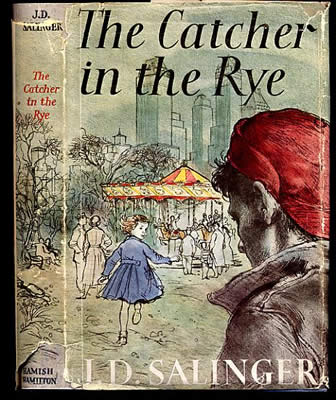
To practise this, I will answer the questions based in a fragment of "The Catcher in the Rye", written by Jerome David Salinger.
  • What is being shown or said in the text? Why is the text interesting?
  • What do you think and feel about the text?
  • What particular elements in the text have led you to your      conclusions?


"Boy, when you're dead, they really fix you up. I hope to hell when I do die somebody has sense enough to just dump me in the river or something. Anything except sticking me in a goddam cemetery. People coming and putting a bunch of flowers on your stomach on Sunday, and all that crap. Who wants flowers when you're dead?"

The text tolds us about the process of death duel of the family. Probably they'll go every Sunday and put flowers in the "stomach" of the dead person, but for Holden Caulfield (protagonist), this is useless. Why'd you want to have flowers in your chest? Personally, I think he is trying to convince himself about this, because he had a brother that died young and he feels bad about it. So he may want to put this ideas in his head so he can try to separate a little bit from thinking in his brother and not feeling bad for not going to the cemetery. 

I have passed through this same situation, and I don't like going to the cemetery, but I think that the flowers are not specifically for the person that is dead, but they are for the person that goes to visit the place, so he feels better. 

Holden is characterized because of his careless way of thinking, so I don't believe his attitude should be discussed.


Are you just watching or making an active reading?

Active reading consists in getting all the content of the text, understanding "through the lines". To do this, I'll give some key techniques to start making an active reading and stop losing time.


  • Record yourself reading the text
  • Underline the text
  • Make annotations at margins
  • Ask yourself questions (think critically)
  • Sticky notes
  • Close the book and ask yourself what is it about
  • Look for important words
  • Explain what you've read to someone else