This week we are going to present about the topic Science and Technology by analysing an image. Here are the points that helped my presentation, apart from the recorder presentation file.
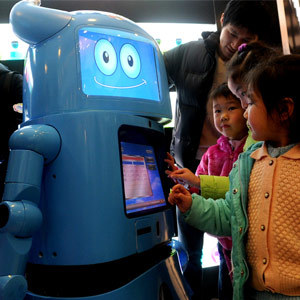 |
While medical robots are designed to be sterile and efficient, others can exhibit a more human touch
And here is the file of my presentation:
|
viernes, 27 de septiembre de 2013
Image analysis: Science and Technology

domingo, 1 de septiembre de 2013
Planning a Robot: The Vaccinator 3000
This week's task is to plan a robot, that would help to solve a problem. My group is also formed by Mr. Reynolds and Mr. Oporto.
 Here are some questions that will help to guide our planning:
What problem or challenge does the robot solve?
The robot tries to solve the main problem which is observed in hospitals: many doctors and nurses are taking care of people that don't require their help so much. So this robot would help to relief some of the work of the nurses and doctors, as it would vaccinate in winter (when the rooms are full of people with a cold or something worse), and also it would derive patients from emergency room, so that they receive specialized attention according to what they need (and without using time of other doctors).
What are some of the functions you will program your robot to carry out?
There are mainly two programs: the first, used in winters, when many people has the flu, and this robot would vaccinate them faster than a human being.
The second program of the robot, is to derive people, and for that, it would have a huge database of every symptoms and their respective possible illnesses.
What materials will it be made out of? Why?
It will be made of metal and the corresponding circuits to assure its functioning, because it's the easiest way to create and program a robot.
How will the robot sense its surroundings?
It will have thermal sensors, to perceive if it's in front of a person or of an object. It will also be able to communicate, and "understand" (through a variety of computational programs).
It will have thermal sensors, to perceive if it's in front of a person or of an object. It will also be able to communicate, and "understand" (through a variety of computational programs).
How will it move and respond to the environment?
It will have wheels, to guarantee an easy movement through the room, where it will go from bed to bed, and from patient to patient, also helped by its thermal sensors.
It will have wheels, to guarantee an easy movement through the room, where it will go from bed to bed, and from patient to patient, also helped by its thermal sensors.
How or why is a robot better equipped to handle this challenge than a human?
A robot would be faster than a human, and also it would make doctors only occupate on other issues in which they might be more required.
What specific functions will the robot carry out? What components will the robot include that help it carry out these tasks?
The robot will have the two programs mentioned above, one of them would help him to complete the task of vaccinating people, and the other one, to "understand" and link symptoms to their respective illness, and then derive the patient to a specialized doctor.
What will the robot look like? Will it look human-like? Why or why not?
It will be the cheapest possible. Probably a "box" (cube) with an arm.
A robot would be faster than a human, and also it would make doctors only occupate on other issues in which they might be more required.
What specific functions will the robot carry out? What components will the robot include that help it carry out these tasks?
The robot will have the two programs mentioned above, one of them would help him to complete the task of vaccinating people, and the other one, to "understand" and link symptoms to their respective illness, and then derive the patient to a specialized doctor.
What will the robot look like? Will it look human-like? Why or why not?
It will be the cheapest possible. Probably a "box" (cube) with an arm.
How will the robot’s appearance influence how people interact with it?
At first people may be scared, but then they'll get used to it and it will be the same as being vaccinated by a person or a human-like robot.
What limitations does the robot have?One of the most important limitations of the robot, is its inability to understand emotions, and as it derives patients in urgency room, it might be wrong in some cases, as emotiveness can affect the patients' trustability and even his/her sickness.
Another problem it could have, is to fail in its mechanical structure.
sábado, 17 de agosto de 2013
Stem Cells Breakthrough & Seeds of Hope
As in the last weeks, I'll answer more questions about stem cells, to have a better idea of what the topic is about.


- Why are stem cells considered so valuable for medical research?
Because stem cells are pluripotent (they can transform into many different specialized cells).
- Why did the researchers have to narrow the spectrum of genes within stem cells? (video 1)
Because doing that, they could reproduce them from skin cells, having a much wider spectrum afterwards.
- What are the sources of stem cells and the advantages and disadvantages associated with using each?
Stem cells used for this kind of investigations are the one that embryos have. The advantages could be that you could eventually regenerate any kind of cell, and potentially heal an organ. Disadvantages could include that, apparently to produce one of those cells and organs, you have to create life, use what you and then need and destroy it.
- What are the three cases presented at the beginning of the second video?
A hockey player whose spinal cord was damaged. Diabetes in a young man. Two girls who were cousins had a genetic disorder (Tay- Sachs disease)
- How might a stem cell be used to treat spinal cord injuries?
They have to insert the stem cell in the damaged spinal cord, and then wait for it to make the "bridge".
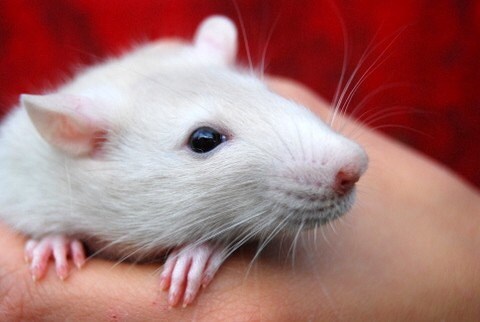
- Explain the outcome of the experiment with injured rats presented in the second video?
Rats whose spinal cord was damaged, were treated and then they could almost walk normally.
- What issues surround the debate over of stem cell research?
Ethic issues. The importance of preserving life.
- What issue do you think needs to be debated as we make decisions about stem cell research?
The importance of having the power to create life carries a huge responsibility, and how can we be sure than this knowledge will be used only for the good of the people.
viernes, 9 de agosto de 2013
Genetic Tool Kit
I'll continue with the same method of answering questions about a video, so that the complete process of development is understood.
Genetic Tool Kit
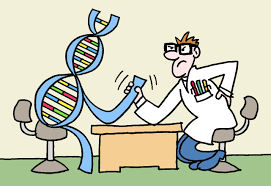
Genetic Tool Kit
- What do homeobox genes code for in animals?
They are the "master" control genes, and they produce the basic body parts in every single animal (wings, arms, legs, head)
- Why are homeobox (also called homeotic) genes called the master control genes, or master switches?
Homeobox genes are, apparently, common genes of every animal, and that can only be explained by saying that we all have a common ancestor.
- What other organisms besides fruit flies have homeobox genes?
Every animal must have homeobox genes, as its basic body parts are produced by those kind of genes.
- What did the experiment with fruit flies and mice show?
Their genes are the same, because they had a common ancestor, but in every single animal there are also other factors that make the gene to produce a specific kind of eye, arm or head.
- What does the presence of packages of information suggest about evolution?
That they have some homeobox genes that are the same, but the other external factors determine what they finally produce. All the evolution process started with a common ancestor, but afterwards factors like weather, food and environment determined which path one specific animal followed.
- How has evolution tinkered with genes of animals?
In evolution, there's always new combination of genes, that produce different species.
- What role has embryos played in the study of evolution?
In this stage it's easier to watch the specie in study during its development, as it's faster and also very notorious every single change that happens.
100th Post!
Finally, after a year and a half of hard work, I've reached my hundredth post. Thanks to you all for the +4400 views.

I hope that you have enjoyed as much as me this lovely process.

Gene Control
As in the last post, I'll answer some questions to understand better the stem cell's issue.

- Why did the German scientist decide to study the fruit flies at the larval stage?
Most of the scientists choose to study this type of flies because they are fast-breeding insects, so it would be easier to investigate when something in their development goes wrong. But this German scientist thought that it would be better to study the same fly, but in its larval stage, so that, even if sometimes it would be more difficult to study them, the result would be better, as it would be the same insect during it growth, so if any problem appeared, they'd know where the problem was.
- How does the mother fly activate the control genes?
She leaves chemical messages, and depending if they are in the end or in the beginning of the egg, they will develop into the tail or head of the fly.
- What is the role of control genes?
Control genes switch on dozens of other genes in the cell, and then they control the activity of other genes in time and space, and they control where and at what time some specific gene is expressed.
- Which of the two species are closer to humans?
If we compare them in terms of control genes and body plans, zebrafish would be closer to humans.
jueves, 8 de agosto de 2013
The Embryo takes shape

In this post, I'll answer some questions about the following video, that will then help me to understand better the stem cell's debate.
The Embryo Takes Shape
- What directs the sequence of events that turn a blob of cells into an embryo with specialized tissues and organs?
The events that turn a blob of cells into a "specialized" embryo is called gastrulation, and is caused mainly by the action of DNA and genes
- The narrator says that “cells talk to each other.” What does that mean?
This means that cells can "communicate" with each other, through chemical messages. Chemicals in one cell can trigger a reaction in the cell next door that can spread into the cell nucleus, and turn genes on or off.
- How do cells in different parts of the embryo become different kinds of cells and organs?
In each type of cell, a different group of genes are turned on, and it makes the cell to construct a particular protein.
- What kinds of proteins are found in different cells and organs?
Collagen: skin, tendons and bones.
Keratin: hair.
Crystalin: makes the lens of the eyes clear.
Actin & Myosin: move muscles fibers.
Hemoglobin: carries oxygen from the lungs to the rest of the body through the blood to the rest of the body.
- What tells the cells which kinds of proteins to make?
Location seems to be the answer, as apparently cells "know where they are" and where they have to intervene. Chemical messages through cells are extremely useful for this part.
- What is the relationship between DNA, genes, and the proteins that are produced in cells?
The cell "machinery", after a short process, can read the DNA and turn on the correct gene, so that in the end they can finally build up a protein.
lunes, 5 de agosto de 2013
Biofuel presentations: Peers assessment
For example, in Mr. Núñez and Mr. Ugarte, I could see that their topic was quite more difficult than mine, because of the technical words they needed to use, as they were presenting about the process of producing biofuels. However this important fact, I think they managed to carry on with the presentation quite smoothly, and the video they used was a great audiovisual help. Perhaps sometimes their voice wasn't as loud as it should, but it's completely understandable if they are talking about a topic they don't (and shouldn't!) really know much about.
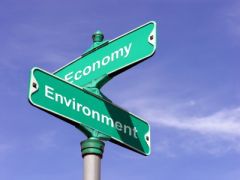
Then it came Mr. Oporto and Mr. Gastó to present about the biofuels' economical effects. This topic was easier than the last one, and they did a pretty good job presenting both sides of the coin. On one hand, the benefits for the economy to have a biofuel production. And on the other hand, why biofuels were harming society through its own economy basis. It was quite interesting this topic, and they did a good job at presenting it.
Suscribirse a:
Entradas (Atom)