sábado, 17 de agosto de 2013

Stem Cells Breakthrough & Seeds of Hope

As in the last weeks, I'll answer more questions about stem cells, to have a better idea of what the topic is about.

  • Why are stem cells considered so valuable for medical research?
Because stem cells are pluripotent (they can transform into many different specialized cells).

  • Why did the researchers have to narrow the spectrum of genes within stem cells? (video 1)
Because doing that, they could reproduce them from skin cells, having a much wider spectrum afterwards.

  • What are the sources of stem cells and the advantages and disadvantages associated with using each?
Stem cells used for this kind of investigations are the one that embryos have. The advantages could be that you could eventually regenerate any kind of cell, and potentially heal an organ. Disadvantages could include that, apparently to produce one of those cells and organs, you have to create life, use what you and then need and destroy it.

  • What are the three cases presented at the beginning of the second video?
A hockey player whose spinal cord was damaged. Diabetes in a young man. Two girls who were cousins had a genetic disorder (Tay- Sachs disease)

  • How might a stem cell be used to treat spinal cord injuries?
They have to insert the stem cell in the damaged spinal cord, and then wait for it to make the "bridge".
  • Explain the outcome of the experiment with injured rats presented in the second video?
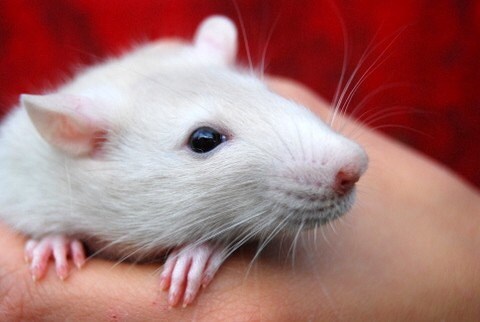
Rats whose spinal cord was damaged, were treated and then they could almost walk normally.


  • What issues surround the debate over of stem cell research?
Ethic issues. The importance of preserving life.

  • What issue do you think needs to be debated as we make decisions about stem cell research?
The importance of having the power to create life carries a huge responsibility, and how can we be sure than this knowledge will be used only for the good of the people.

viernes, 9 de agosto de 2013

Genetic Tool Kit

I'll continue with the same method of answering questions about a video, so that the complete process of development is understood. 

Genetic Tool Kit


  • What do homeobox genes code for in animals?
They are the "master" control genes, and they produce the basic body parts in every single animal (wings, arms, legs, head)

  • Why are homeobox (also called homeotic) genes called the master control genes, or master switches?
Homeobox genes are, apparently, common genes of every animal, and that can only be explained by saying that we all have a common ancestor.

  • What other organisms besides fruit flies have homeobox genes?
Every animal must have homeobox genes, as its basic body parts are produced by those kind of genes.

  • What did the experiment with fruit flies and mice show?
Their genes are the same, because they had a common ancestor, but in every single animal there are also other factors that make the gene to produce a specific kind of eye, arm or head.


  • What does the presence of packages of information suggest about evolution?
That they have some homeobox genes that are the same, but the other external factors determine what they finally produce. All the evolution process started with a common ancestor, but afterwards factors like weather, food and environment determined which path one specific animal followed.

  • How has evolution tinkered with genes of animals?
In evolution, there's always new combination of genes, that produce different species.
  • What role has embryos played in the study of evolution?
In this stage it's easier to watch the specie in study during its development, as it's faster and also very notorious every single change that happens.

100th Post!

Finally, after a year and a half of hard work, I've reached my hundredth post. Thanks to you all for the +4400 views.


I hope that you have enjoyed as much as me this lovely process.

Gene Control


As in the last post, I'll answer some questions to understand better the stem cell's issue.


  • Why did the German scientist decide to study the fruit flies at the larval stage?

Most of the scientists choose to study this type of flies because they are fast-breeding insects, so it would be easier to investigate when something in their development goes wrong. But this German scientist thought that it would be better to study the same fly, but in its larval stage, so that, even if sometimes it would be more difficult to study them, the result would be better, as it would be the same insect during it growth, so if any problem appeared, they'd know where the problem was.

  • How does the mother fly activate the control genes?
She leaves chemical messages, and depending if they are in the end or in the beginning of the egg, they will develop into the tail or head of the fly. 

  • What is the role of control genes?
Control genes switch on dozens of other genes in the cell, and then they control the activity of other genes in time and space, and they control where  and at what time some specific gene is expressed. 

  • Which of the two species are closer to humans?
If we compare them in terms of control genes and body plans, zebrafish would be closer to humans.


jueves, 8 de agosto de 2013

The Embryo takes shape


In this post, I'll answer some questions about the following video, that will then help me to understand better the stem cell's debate.

The Embryo Takes Shape

  • What directs the sequence of events that turn a blob of cells into an embryo with specialized tissues and organs?
The events that turn a blob of cells into a "specialized" embryo is called gastrulation, and is caused mainly by the action of DNA and genes

  • The narrator says that “cells talk to each other.” What does that mean?
This means that cells can "communicate" with each other, through chemical messages. Chemicals in one cell can trigger a reaction in the cell next door that can spread into the cell nucleus, and turn genes on or off.

  • How do cells in different parts of the embryo become different kinds of cells and organs?
In each type of cell, a different group of genes are turned on, and it makes the cell to construct a particular protein.

  • What kinds of proteins are found in different cells and organs?
Collagen: skin, tendons and bones.
Keratin: hair.
Crystalin: makes the lens of the eyes clear.
Actin & Myosin: move muscles fibers.
Hemoglobin: carries oxygen from the lungs to the rest of the body through the blood to the rest of the body.


  • What tells the cells which kinds of proteins to make?
Location seems to be the answer, as apparently cells "know where they are" and where they have to intervene. Chemical messages through cells are extremely useful for this part.

  • What is the relationship between DNA, genes, and the proteins that are produced in cells?
The cell "machinery", after a short process, can read the DNA and turn on the correct gene, so that in the end they can finally build up a protein.

lunes, 5 de agosto de 2013

Biofuel presentations: Peers assessment


I can't say that it isn't tough for me to state if my partners presentations were perfect or awful, because I don't even know much of this language. But, what I can say, are the aspects that called my attention in their presentations.

For example, in Mr. Núñez and Mr. Ugarte, I could see that their topic was quite more difficult than mine, because of the technical words they needed to use, as they were presenting about the process of producing biofuels. However this important fact, I think they managed to carry on with the presentation quite smoothly, and the video they used was a great audiovisual help. Perhaps sometimes their voice wasn't as loud as it should, but it's completely understandable if they are talking about a topic they don't (and shouldn't!) really know much about.

Then it came Mr. Oporto and Mr. Gastó to present about the biofuels' economical effects. This topic was easier than the last one, and they did a pretty good job presenting both sides of the coin. On one hand, the benefits for the economy to have a biofuel production. And on the other hand, why biofuels were harming society through its own economy basis. It was quite interesting this topic, and they did a good job at presenting it.

domingo, 4 de agosto de 2013

Biofuels and ethics


Apparently, there's no precise answer when it comes to the ethics of biofuels. At least in my case, before studying this topic, I still had the idea that biofuels were going to be the "salvation" of the world. But now I know that there are many studies against this idea. 


What's the problem then? They are basically two: first, there's no complete and wide investigation, that covers all the topic's implicances and second, most of the "studies" that exist are completely biased by the own investigator's ideas.

It used to be the way of saving the world's unequal distribution of food, but it looks like it has just opened a new business. Now, instead of fighting for the right of the people to live and eat, many of them are using agricultural lands (instead of other lands they could be using), just to produce biofuels, that are quite more profitable than food. This is completely unacceptable and should be regulated. 


But there's also the other side of the coin. Apparently this "studies" that state horrorful things about the biofuels, like that they are contaminating even more that fossil fuels, are not much reliable. And, according to other investigations, biofuels are actually quite good to the environment, and do serve to their first purpose: to stop pollution and carry on with the globalization.


As I said in the beginning, apparently there isn't one truth in this topic. I hope that someone makes a complete investigation, and massifies this to the public, or otherwise it wouldn't matter all the results he concluded. So now, the question goes for you: what do you think about biofuels? Are they actually making any bad to the environment, or is that just a political attack?

miércoles, 31 de julio de 2013

What is the effect of producing biofuels on land used for food or cattle?

Biofuel production has increased in recent years. Some commodities like maize (corn), sugar cane or vegetable oil can be used either as food, feed, or to make biofuels. For example, since 2006, a portion of land that was also formerly used to grow other crops in the United States is now used to grow corn for biofuels, and a larger share of corn is destined to ethanol production, reaching 25% in 2007.

A recent study for the International Centre for Trade and Sustainable Development shows that market-driven expansion of ethanol in the US increased maize prices by 21 percent in 2009, in comparison with what prices would have been had ethanol production been frozen at 2004 levels.

Second generation biofuels could hence potentially combine farming for food and fuel and moreover, electricity could be generated simultaneously, which could be beneficial for developing countries and rural areas in developed countries. With global demand for biofuels on the increase due to the oil price increases taking place since 2003 and the desire to reduce oil dependency as well as reduce GHG emissions from transportation, there is also fear of the potential destruction of natural habitats by being converted into farmland.

In February 2010 Lapola estimated that planned expansion of Brazilian sugarcane and soybean biofuel plantations through 2020 would replace rangeland, with small direct land-use impact on carbon emissions. However, the expansion of the rangeland frontier into Amazonian forests, driven by cattle ranching would indirectly offset the savings. "Sugarcane ethanol and soybean biodiesel each contribute to nearly half of the projected indirect deforestation of 121,970 km2 by 2020, creating a carbon debt that would take about 250 years to be repaid....

However, a 2010 study also by the World Bank concluded that their previous study may have overestimated the contribution of biofuel production, as "the effect of biofuels on food prices has not been as large as originally thought, but that the use of commodities by financial investors (the so-called "financialisation of commodities") may have been partly responsible for the 2007/08 spike." A 2008 independent study by OECD also found that the impact of biofuels on food prices are much smaller.

Biofuels are the best way of reducing our emissions of carbon dioxide and other greenhouse gases responsible for global climate change. As with fossil fuels, burning biodiesel or ethanol to drive an engine or generate electricity releases carbon into the atmosphere. Unlike with fossil fuels, however, growing the plants from which biofuels are made takes carbon from the air, so overall the process is carbon neutral. This means policies to increase the use of biofuels could greatly reduce overall levels of carbon emissions, and so be a major part of tackling global climate change. Since the international community has made reducing climate change a priority, with different climate conferences like Copenhagen, seeking energy alternatives should be at the forefront of their efforts. Biofuels can also help improve local air quality as mixing ethanol with fossil fuels helps meet clean air standards, and overall be one of the tools used to reduce carbon emissions into the atmosphere.

Extra-Material:


Biofuels seemed to be the solution to the environment issues. However, now we can see that some studies have stated that they aren't that good, as they may increase food prices and can eventually contaminate as much as petrol. On the other side, they are considered to be the solution as they are supposed to be eco-friendly and can clean the air, as well as they reduce the petrol price. Unfortunately, it is hard to decide which position is correct as there are no official researches about the real effect of biofuels in land and food production. Moreover, it will be very hard to do such investigation as many other factors influence the food price, apart from the land availability.

But now, we also want to make you part of this debate: do you think that the control of the food prices is more important than the preservation of the environment, considering that food is actually enough for the world's population if it's correctly distributed? In other words, is it acceptable that a human creation (Prices) prevent the correct distribution of food, forcing us to contaminate more in order to allow this distribution to be done? Aren't we, as humanity, suffering a self-made and virtual problem?