- Record yourself reading the text
- Underline the text
- Make annotations at margins
- Ask yourself questions (think critically)
- Sticky notes
- Close the book and ask yourself what is it about
- Look for important words
- Explain what you've read to someone else
domingo, 22 de abril de 2012
Are you just watching or making an active reading?
miércoles, 18 de abril de 2012
Criticizing Literature
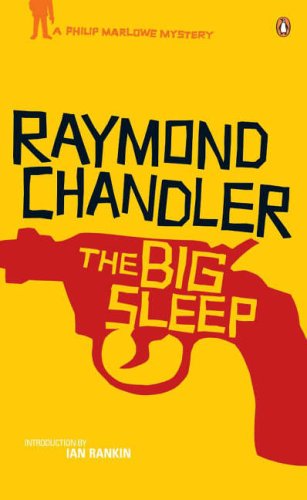
I made a short analysis about a fragment of "The Big Sleep", by Raymond Chandler. So hope you enjoy it!
Criticizing Images

lunes, 16 de abril de 2012
Critical thinking
Why do we need to be critical thinkers? If you have ever thought about this question, it means that you have, at least a little part in you that thinks critically! Nowadays it's something very important to criticize the things that are told to us, even if they are given as "facts". Many people talks as if they were experts, but they just invent information an tell it as if it was reliable.
Personally, I think that some adults consider that when children critize them, they are just being rude and that they should only agree what they hear. I couldn't be more against this position, because every single person has the rights to express his own ideas.
domingo, 15 de abril de 2012
Real meaning?
For a better
understanding of literature, I'll analyze the next poem with some few
questions.
You fit into me
You fit
into me
like a
hook into an eye
A fish
hook
An open
eye
1 1.What
is the relationship between the title and the rest of the poem?
As usual, the title is also the theme
of the poem.
2 2.What
words, if any, need to be defined (for example, are you familiar with a
hook-and-eye clasping system in clothing)?
Hook-and-eye: A clothes fastener
consisting of a small blunt metal hook that is inserted in a corresponding loop
or eyelet. (www.thefreedictionary.com).
3 3.What
relationships do you see among any words in the poem?
They are put in a way that, when you
start reading you expect to find some type of love poem, but finally, you find
that it wasn't that the purpose of the text.
4 4.What
are the various connotative meanings of the words in the poem? Do these various
shades of meaning help establish relationships or patterns in the text?
When you first read "You fit
into me, like a hook into an eye", you think that one person was made for
being with the other one, but when you read the other two lines "A fish
hook, An open eye", you realize that it meant something painful,
unforgettable.
5 5.What
symbols, images or figures of speech are used? What is the relationship between
them?
The entire poem is ambiguous. They all want to, at first, let us think it's something romantic, but then, we realize that is meant something horrorful.
6 6.What
elements of rhyme, meter or pattern can you discuss?
It has got no rhyme, except for the
repetition in lines two and four of the word "eye". In all the rest
of it, it has no pattern.
7 7.What
is the tone of the poem?
At first sight, love. After understanding
the real meaning, madness or anger.
8 8. From
what point of view is the content of the poem being told?
From a person that was hurt by
his/her date.
9 9.What
tensions, ambiguities or paradoxes arise within the poem?
An ambiguity could be find in the "hook
into an eye" expression. Hook and eye, can mean a clothing fastener, or
literally a hook inserted into an eye.
1 10.What
do you believe the chief paradox or irony is in the text?
The "hook into an eye"
expression, that in one part, means love, but also hate.
1 11. How
do all of the elements of the poem support and develop the primary paradox or
irony?
The element that support more the
development of the paradox, is the ambiguity that expresses "hook into an
eye". All of the present elements in the text, demonstrate the persona's
feelings, and as it happens, his/her feelings are not clear and have a
combination of love and hate to that person.
History of Studies of Literature
how do literature has been studied? For answering this, continue the reading below.
Greeks: In the V Century, the first who investigated about this topic where the people of the Peloponnese region. For them, the key concepts about literature where the Ontology (study of existence) and Epistemology (study of limits of knowledge)
Romanticism: In the Early XIX Century, in Europe they thought about this topic as something strongly relationed with feelings, expressions. So the best way to fulfill this anxiety was through poetry with common language, so everyone could understand it.
Scientific Determinism: In the Mid XIX Century, the Sciences became very important to all aspects of life. Of course, literature was one of those aspects. So through science and observation, they tried to investigate literature.
New Criticism: In the Early XX Century, they focused on the text only. The author, history, etc, had no importance at all when studying a piece of literature.
Reader Response: Also in the Early XX Century, some people thought about the reader of the text as the important aspect of studying literature. The personal experience of the reader had a substancial role in the text study.
Structuralism: Also in this same period, other thought arised. This separated the "signified" (idea) of the "signifier" (word).
Post-Structuralism: In the Mid XX Century, this idea borned. This proposed that we know what something is because we know it isn't another thing.
Marxism: This idea said that every single text had "subtexts" inside of it, that had a relation with ideological conflicts or social classes, problems that were quite discussed in those days.
Feminism: It put women as object of study. Women's experiences in literature.
Cultural Poetics: History as body of knowledge.
Postcolonial Criticism: Approach to texts produced in colonized countries. Ethnicity, Nationalism, and others are the bases of this study.
As you can see, through almost all History of men, we have investigated and studied Literature, because it's something almost as inherent to humans as language itself. For me, the Reader Response study is the most correct, because not everyone can see what you can see in a text. Comment with which of them you agree the most.
| Joke about Feminism |
Great Oral Presentation!
To test our learning process, we had to make an oral activity in which we demonstrated all our knowledge of Language. Particularly, in the group formed by José Tomás Gré, Thomas Reynolds and me, we made some sort of play about The Tower of Babel. It was quite funny and also in it, we discussed about different theories of how do we acquire language. The best thing of all, was that it was almost the only presentation that was performed, so it was different to the other ones. I enjoyed a lot with that kind of demonstration of all the achieved knowledge, as also I liked very much the debate activity we have done a pair of weeks before. I think oral presentations are the best way to put in practise all the things learnt in class.viernes, 6 de abril de 2012
What is Literature?
From the V Century, men has being trying to answer the definition of literature. The Greeks started this process, but even nowadays, we don't have a clear denomination of the word. Some people think that literature is every single piece of written language, but others define it as something of pieces of "high culture", that means, Shakespeare's novels, poems, etc.
Suscribirse a:
Entradas (Atom)